


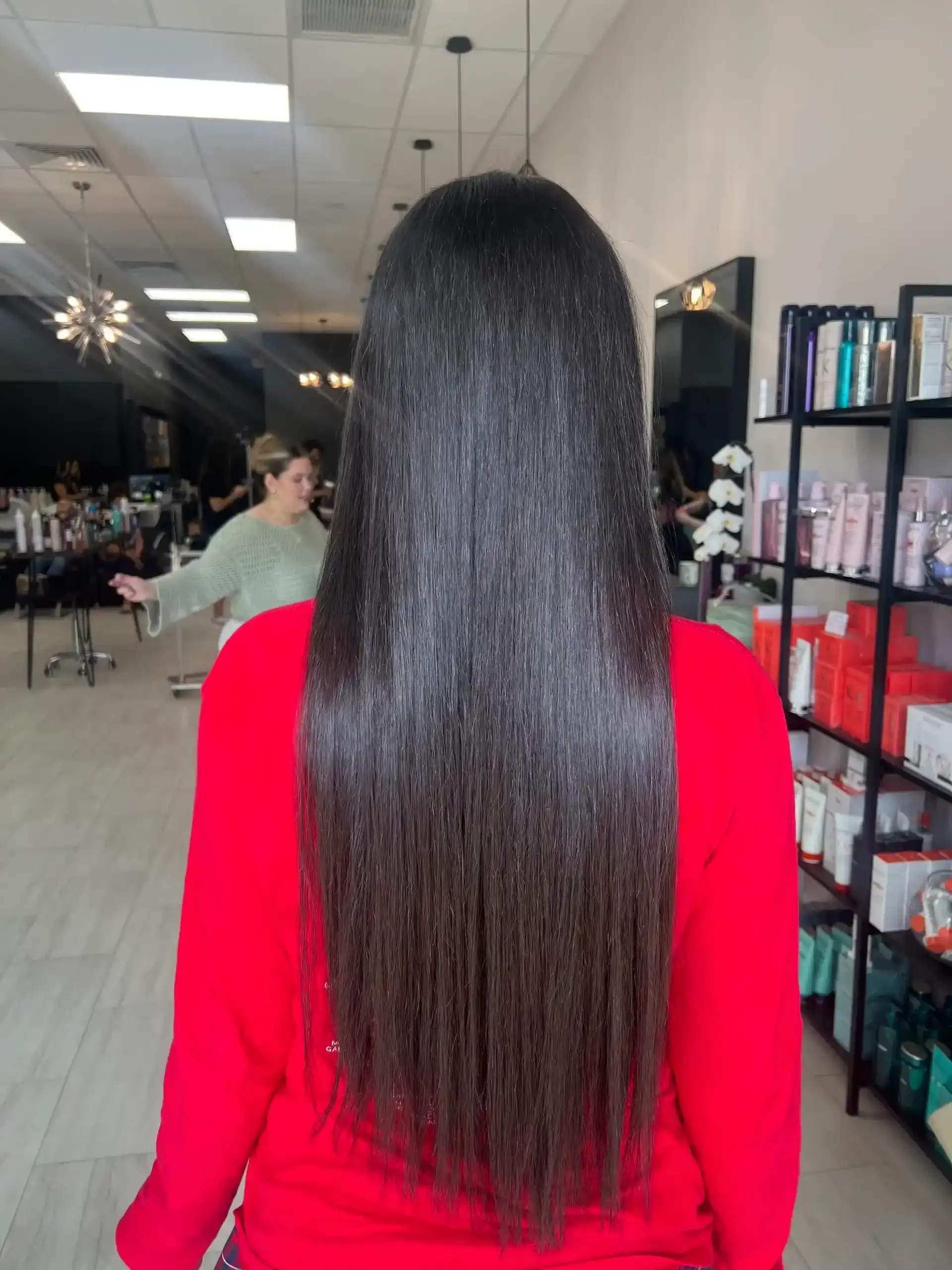
Can Keratin Damage Hair? The Honest Answer
Keratin itself is not the enemy. Your hair fiber is largely made of keratin, a structural protein that gives strands their strength and shape. However, salon smoothing treatments are not simply protein masks. They are chemical services designed to temporarily reduce frizz, relax the look of the natural pattern, and create a smoother surface on the hair.
Most treatments work by applying a smoothing formula, then using controlled heat to set it into the cuticle. That process is where precision becomes essential. High heat, repeated passes with a flat iron, an overly strong formula, or processing beyond what your hair can tolerate may leave fragile hair feeling dry, stiff, or more prone to breakage.
The risk is higher when hair is already compromised. Frequent lightening, at-home color, previous relaxers, excessive heat styling, hard-water buildup, and untreated split ends can all reduce the fiber's resilience. A smoothing service cannot erase that history. In some cases, the most luxurious recommendation is to postpone the keratin appointment, focus on repair and hydration, and revisit smoothing when the hair has more strength to work with.
What Actually Causes Damage During a Keratin Service?
Damage is rarely caused by one factor alone. It is more often the result of a mismatch between the service and the hair. For example, very porous blonde hair may absorb formula quickly and require a gentler approach than healthy, dense, coarse curls. A stylist who treats both heads of hair identically may create uneven results and unnecessary stress.
Heat is a major variable. Flat irons are used to seal many smoothing formulas into the hair, but hotter is not automatically better. Fine, highlighted, or fragile hair needs careful temperature control and fewer passes than resilient, coarse hair. The aim is smoothness with movement and softness, not a pressed, brittle finish.
Formula selection matters just as much. Professional systems differ in ingredients, strength, longevity, and compatibility with color-treated hair. Some smoothing services are designed to reduce frizz while preserving more of the natural wave or curl. Others create a straighter result. A reputable salon should clearly explain what the chosen system is intended to do, how long it may last, and the maintenance it requires.
Protein overload can also be mistaken for “damage from keratin.” Hair that receives too much protein, especially when it is already dry or low in moisture, can feel hard, rough, or inflexible. That does not mean all protein is harmful. It means the hair needs balance. Protein supports structure, while moisture supports pliability. Healthy hair needs both.
Who Should Be Cautious With Keratin Smoothing?
If your hair has recently been heavily lightened, experienced breakage, or feels gummy when wet, a smoothing treatment may not be the right next step. Those are signs that the inner structure may already be under strain. The same is true for hair with significant shedding, scalp irritation, open sores, or unexplained sensitivity. In these situations, scalp comfort and hair recovery should come first.
Clients with very fine hair should not assume keratin is off-limits. Fine hair can benefit from frizz reduction, but it needs a customized formula and a conservative heat strategy so it does not lose body. Clients who love defined curls should also be clear about their priorities. Even a curl-friendly smoothing treatment can loosen the visible pattern for a period of time.
Color timing deserves special attention. Keratin can be incorporated into a color maintenance plan, but the order and spacing of services depend on the formula and your color goal. For someone maintaining bright blonding, dimensional brunette tones, or gray coverage, a stylist should plan around fade resistance, porosity, and the condition of the ends. There is no one-size-fits-all calendar.
A Safer, More Beautiful Approach to Smoothing
A quality keratin appointment begins before product ever touches the hair. The consultation should identify what “manageable” means to you. Do you want to air-dry with less frizz? Cut your blow-dry time in half? Soften a coarse texture? Maintain your curls but reduce humidity-driven expansion? These goals may call for different services or, occasionally, a non-chemical solution such as a strategic cut, restorative treatment, or a more effective home routine.
At Grey & Sage Salon, healthy-hair planning centers on an honest assessment of the fiber before recommending a transformation. That may include reviewing previous color services, feeling the hair's elasticity, checking for uneven porosity, and discussing how often you heat-style. This level of detail protects your investment because a radiant result should still feel good in your hands weeks later.
During the service, careful sectioning, application control, timing, and temperature adjustment make a meaningful difference. The stylist should avoid treating already delicate areas as though they are untouched virgin hair. Often, the ends and highlighted pieces require a different level of care than the stronger hair near the scalp.
The best result is not necessarily the straightest one. It is the result that supports your lifestyle while respecting the character and condition of your hair. For some clients, that means a sleek, humidity-resistant finish. For others, it means smoother curls with bounce intact.
How to Protect Your Hair After a Keratin Treatment
Your at-home routine helps determine whether the hair stays glossy and flexible or begins to feel depleted. Use the products your stylist recommends for your specific service and hair needs. Many smoothing systems have guidance around cleansing, conditioning, and the first few days after the appointment, so follow those instructions rather than relying on generic advice online.
Gentle cleansing and consistent conditioning are usually central to maintaining a smooth finish. Avoid overly harsh shampoos that can strip the hair and shorten the life of the service. If your hair is color-treated, choose a routine that also supports color longevity. A heat protectant remains essential, even after keratin, because your hair can still be stressed by hot tools and sun exposure.
Do not chase the treatment's shine with daily flat-ironing. The point of smoothing is to make styling easier, not to give you a reason to apply more heat. Lower temperatures, fewer passes, and intentional heat-free days preserve softness. Regular trims also prevent existing split ends from traveling higher up the strand.
Pay attention to how the hair feels, not only how it looks in a mirror. If it begins to feel unusually rigid, tangles more easily, or snaps during brushing, schedule a professional assessment before booking another chemical service. A nourishing moisture-focused plan may be the wiser next move.
The Right Question Is Whether Keratin Is Right for Your Hair
Keratin smoothing can be a wonderful service for someone who wants less frizz, more styling ease, and a refined finish in Florida humidity. It is not a repair treatment for severely damaged hair, and it should never be used to force a result your hair cannot safely support.
The most confidence-building choice is a plan tailored to your present hair condition, not just your desired texture. With the right formula, measured heat, thoughtful timing around color, and supportive home care, smoothing can feel like a luxurious part of a healthy hair routine rather than a compromise.


